
Why Preparation Creates Opportunity
The organizations that respond best to change are rarely the ones with the newest technology.
They are the ones that prepared before change arrived.
Whether the challenge is artificial intelligence, cybersecurity, economic uncertainty, regulatory change, or rapid growth, future-ready organizations have one thing in common:
They intentionally build capabilities before they become urgent.
The future doesn't reward the organizations that react the fastest. It rewards the organizations that prepared the best.
In Brief
Being future-ready is not about predicting tomorrow.
It means building an organization that can adapt with confidence.
Future-ready organizations invest in:
Executive technology leadership
Modern infrastructure
Cybersecurity resilience
Data-driven decision making
AI readiness
Workforce development
Continuous improvement
Together, these capabilities create agility instead of uncertainty.
What Future-Ready Really Means
A future-ready organization can:
Respond quickly to change.
Adopt new technology strategically.
Recover from disruptions.
Scale without unnecessary complexity.
Make decisions using reliable data.
Keep technology aligned with its mission.
Readiness is a capability, not a project.
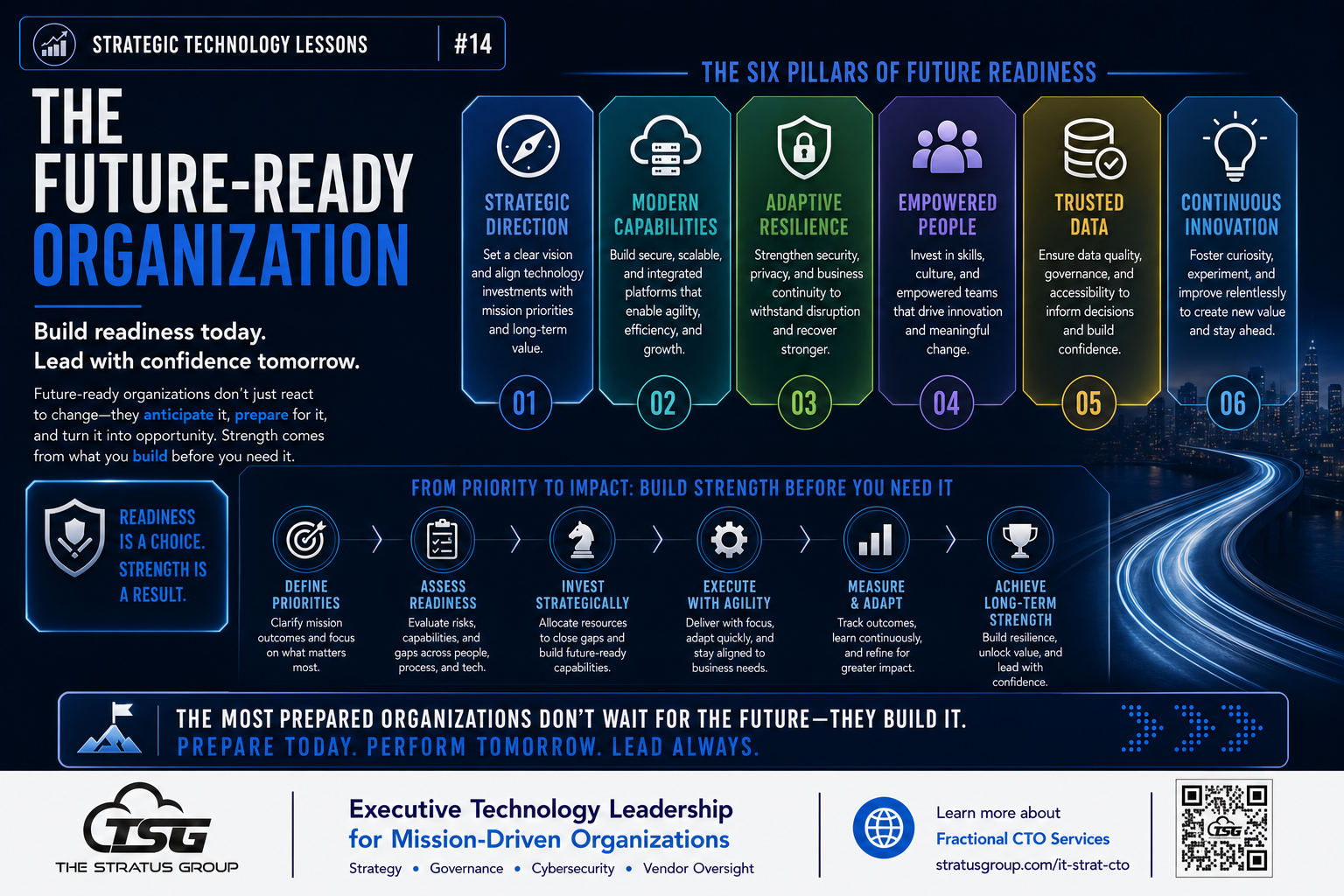
The Six Pillars of Future Readiness
1. Strategic Leadership
Technology decisions support long-term organizational goals.
2. Modern Platforms
Infrastructure is secure, reliable, and scalable.
3. Cyber Resilience
Security is governed as organizational risk.
4. Trusted Data
Leadership has accurate information for decision-making.
5. Adaptive People
Teams embrace learning and continuous improvement.
6. Continuous Innovation
New ideas are evaluated intentionally, measured, and refined.
Warning Signs
Organizations may not be future-ready when:
Technology projects are always reactive.
Legacy systems limit growth.
Data is fragmented.
AI adoption lacks governance.
Vendors define the technology agenda.
Leadership lacks visibility into technology risk.
Executive Technology Check
Ask your leadership team:
Could we confidently respond to major change tomorrow?
Is our technology roadmap preparing us for the next three years?
Do we have the skills and governance needed for AI and emerging technologies?
Are technology investments building long-term capability?
What would make our organization more resilient next year than it is today?
Key Takeaways
Future readiness is built intentionally.
Resilience comes from leadership, planning, and governance.
Technology should increase adaptability, not complexity.
Organizations that prepare proactively respond more confidently to change.
Readiness is one of the greatest competitive advantages an organization can develop.
Closing Thought
No one can predict the future.
But every organization can prepare for it.
The leaders who invest in readiness today will have more choices, greater resilience, and stronger mission impact tomorrow.
Continue the Conversation
The Stratus Group helps mission-driven organizations build future-ready technology strategies through Fractional CTO leadership, governance, roadmaps, cybersecurity, and digital transformation.
Learn more:
https://www.stratusgroup.com/it-strat-cto
Next in the Series
Strategic Technology Playbook #15 - Turning Data Into Better Decisions