
Every Organization Needs a Technology Roadmap - STL #6
Why Direction Matters More Than the Next Technology Purchase
Imagine beginning a cross-country trip without deciding on a destination.
You might buy fuel, maintain the vehicle, and choose good roads, but every decision would still be reactive because no one agreed on where you were trying to go.
Many organizations manage technology the same way.
They approve projects, replace equipment, purchase software, and respond to vendor recommendations without an agreed-upon technology destination.
You end up with activity, but not much alignment.
A technology roadmap doesn't predict the future. It ensures today's decisions support tomorrow's goals.
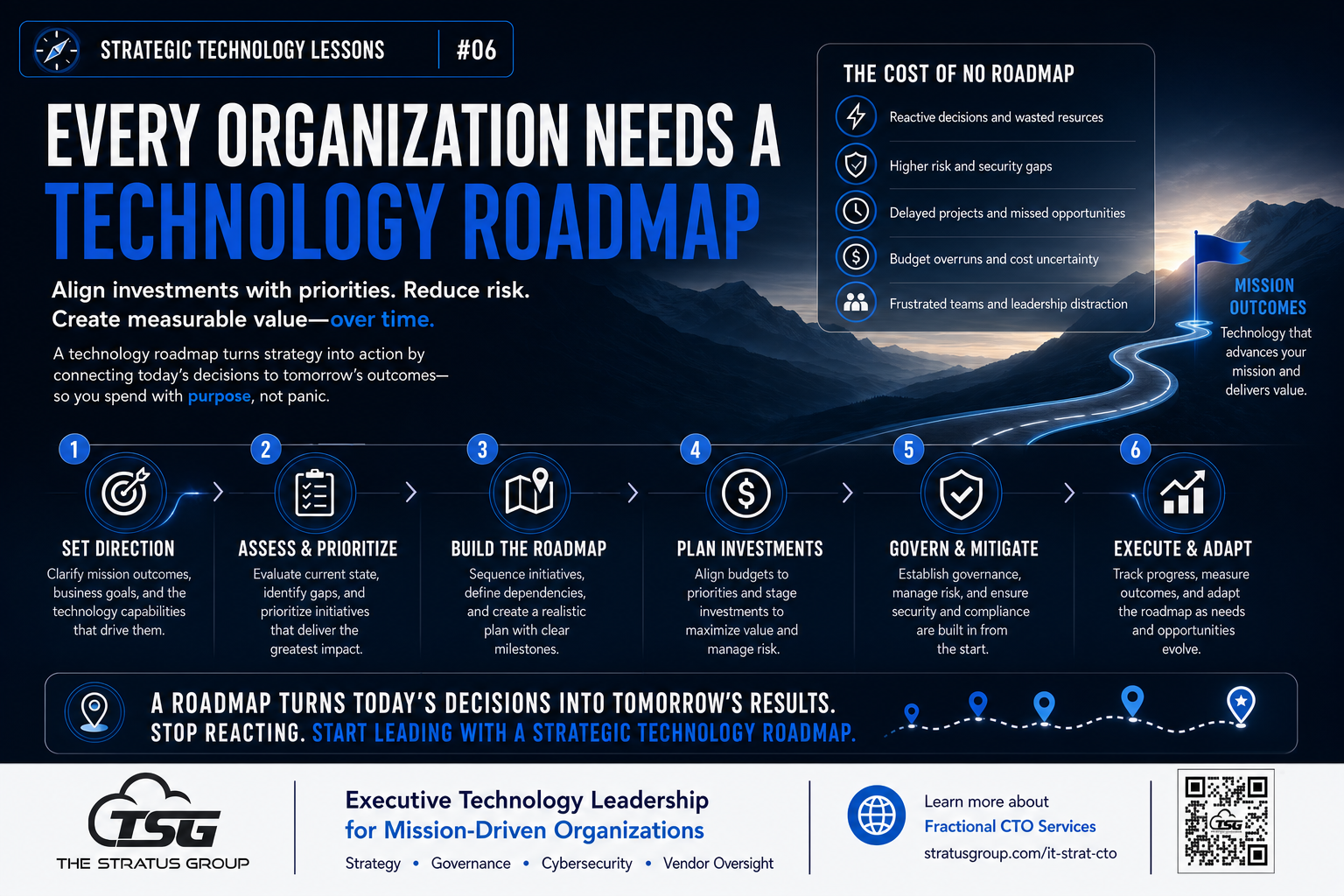
In Brief
A technology roadmap is more than a list of projects.
It is a strategic plan that connects technology investments to organizational priorities over multiple years.
Without a roadmap, organizations often experience:
Competing priorities
Vendor-driven decisions
Budget surprises
Delayed projects
Duplicate investments
Executive uncertainty
A roadmap gives leadership confidence that each technology investment contributes to a larger strategy.
What Is a Technology Roadmap?
A technology roadmap answers five executive questions:
Where are we today?
Where do we need to be?
What capabilities will help us get there?
When should investments occur?
How will we measure success?
It aligns technology with mission, not just maintenance.
What a Good Roadmap Includes
A mature roadmap typically addresses:
Organizational goals
Infrastructure lifecycle
Cybersecurity improvements
Cloud strategy
Business applications
Data and reporting
AI readiness
Budget planning
Risk reduction
Vendor strategy
Each initiative has a business purpose, expected outcome, timeline, and executive owner.
Roadmap vs. Project List
A project list answers:
What are we doing next?
A roadmap answers:
Why are we doing it, how does it support the mission, and what comes after it?
That distinction helps executives prioritize investments instead of reacting to the loudest request.
Common Signs You Don't Have a Roadmap
Technology priorities change every quarter.
Projects begin before previous ones are complete.
Budgets are built around emergencies.
Vendors introduce most new initiatives.
Leadership cannot explain technology priorities three years from now.
Building a Roadmap
Successful organizations typically follow this process:
Assess the current environment.
Understand organizational objectives.
Identify gaps, risks, and opportunities.
Prioritize initiatives.
Build a realistic multi-year plan.
Review and adjust the roadmap annually.
A roadmap should evolve as the organization changes, but it should not change every time a new technology trend appears.
Executive Technology Check
Ask your leadership team:
Do we have a documented technology roadmap?
Does every major technology investment support that roadmap?
Can the board understand our technology priorities?
Are technology budgets based on a long-term plan?
Who is accountable for keeping the roadmap current?
Key Takeaways
Every organization needs a technology destination.
Technology investments should follow strategy, not urgency.
A roadmap improves budgeting, governance, and accountability.
Vendors implement technology; leadership determines direction.
A roadmap transforms technology from a cost center into a strategic asset.
Closing Thought
Roadmaps do not eliminate uncertainty.
They reduce unnecessary surprises.
Organizations with a clear technology roadmap make fewer reactive decisions because they already know where they are going.
Continue the Conversation
The Stratus Group helps mission-driven organizations create practical technology roadmaps that align investments, governance, cybersecurity, and operational priorities with long-term organizational goals through Fractional CTO services.
Learn more:
https://www.stratusgroup.com/it-strat-cto
Next in the Series
Strategic Technology Playbook #7 - Who Owns Cybersecurity? (Hint: It's Not Just IT.)