
Who Owns Cybersecurity? - STL #7
Why Cybersecurity Is an Executive Responsibility, Not Just an IT Function
When a cybersecurity incident occurs, most organizations immediately ask:
What happened?
A better question is:
Who owned the risk before it became an incident?
Cybersecurity is often viewed as an IT responsibility, but it is fundamentally an organizational risk that affects finances, operations, compliance, reputation, donor confidence, and mission delivery.
Technology teams implement security.
Leadership owns organizational risk.
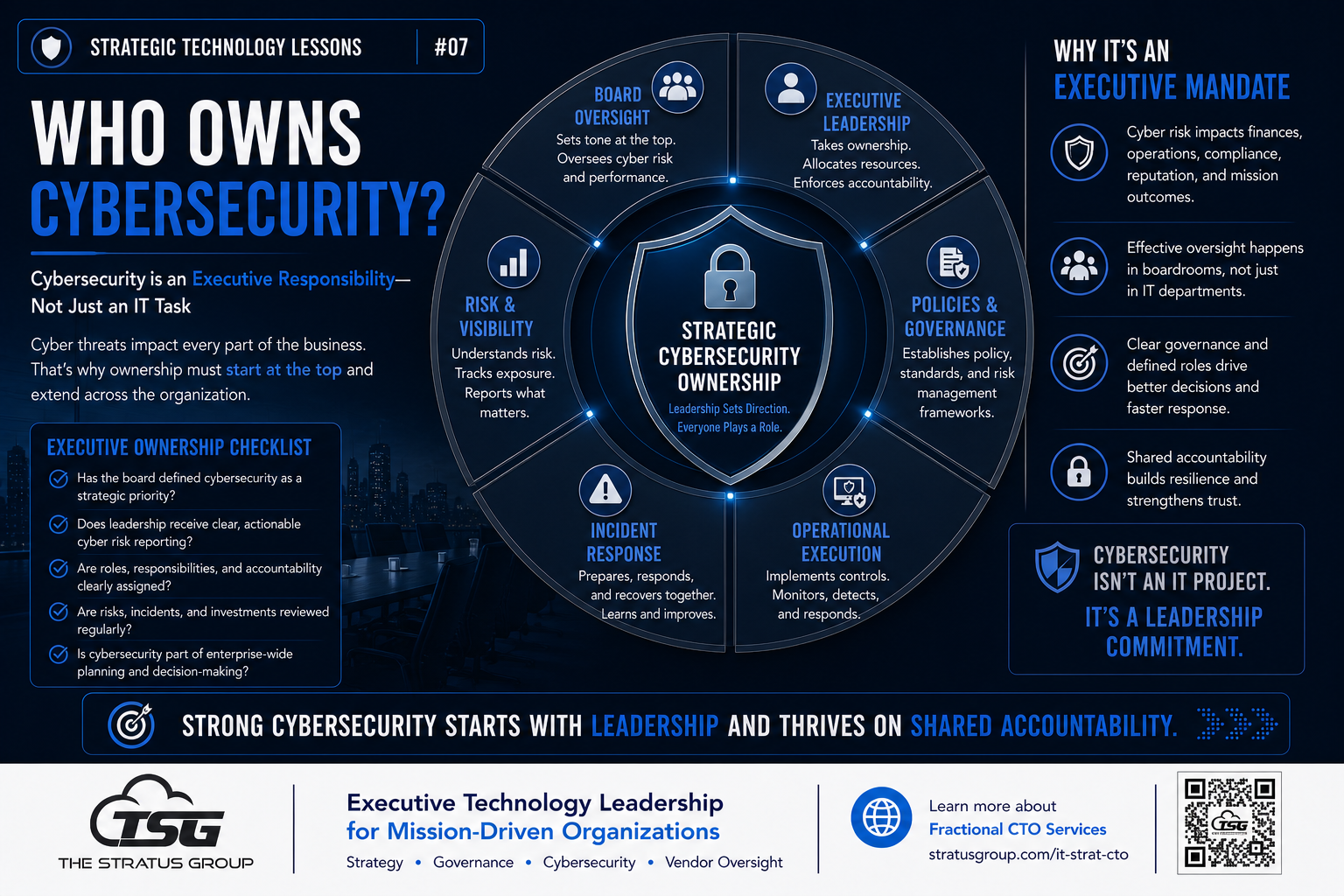
Cybersecurity is not simply an IT responsibility. It is an executive leadership responsibility.
In Brief
Security tools are essential, but they do not answer executive questions such as:
What level of cyber risk is acceptable?
Which systems are mission critical?
How much should we invest?
Who makes decisions during an incident?
What should the board know?
Those are governance questions.
The Common Misunderstanding
Many organizations believe:
"Our MSP handles cybersecurity."
An MSP can provide outstanding technical security services, including monitoring, endpoint protection, backups, and incident response.
Leadership must still determine:
Risk tolerance
Governance
Budget
Policies
Vendor accountability
Incident response authority
Regulatory obligations
Those responsibilities cannot be outsourced.
Cybersecurity Is Risk Management
Cybersecurity belongs alongside financial, operational, legal, and reputational risk.
It should be discussed in:
Board meetings
Strategic planning
Budget reviews
Vendor evaluations
Business continuity planning
It is not simply an IT topic.
Shared Responsibility
Board
Provides oversight and understands organizational cyber risk.
Executive Leadership
Sets priorities, approves investments, and establishes governance.
Fractional CTO
Builds strategy, evaluates vendors, develops roadmaps, measures risk, and advises leadership.
MSP / IT Team
Implements controls, monitors systems, maintains infrastructure, and responds to incidents.
Employees
Follow security policies, recognize phishing, and report suspicious activity.
Cybersecurity succeeds when every layer understands its role.
Questions Every Executive Should Ask
Instead of asking:
"Are we secure?"
Ask:
What are our greatest cyber risks?
Which systems are most critical to our mission?
How quickly could we recover?
How often do we test our response plan?
Who independently evaluates our cybersecurity program?
How is cyber risk reported to the board?
Executive Technology Check
Who owns cybersecurity governance?
Does the board receive meaningful cybersecurity reporting?
Who evaluates cybersecurity investments independently?
Do we know our highest organizational risks?
Have we tested our incident response plan?
Key Takeaways
Cybersecurity is organizational risk management.
Technology teams implement security.
Leadership governs security.
MSPs provide technical expertise but do not replace executive accountability.
Strong cybersecurity requires shared responsibility.
Closing Thought
Cybersecurity isn't something an organization buys.
It is something an organization leads.
The strongest security programs combine technology, governance, leadership, and accountability.
Continue the Conversation
The Stratus Group helps mission-driven organizations strengthen cybersecurity through Fractional CTO leadership, governance, vendor oversight, and strategic planning.
Learn more:
https://www.stratusgroup.com/it-strat-cto
Next in the Series
Strategic Technology Playbook #8 - AI Doesn't Need an IT Strategy. It Needs a Business Strategy.