
Blog
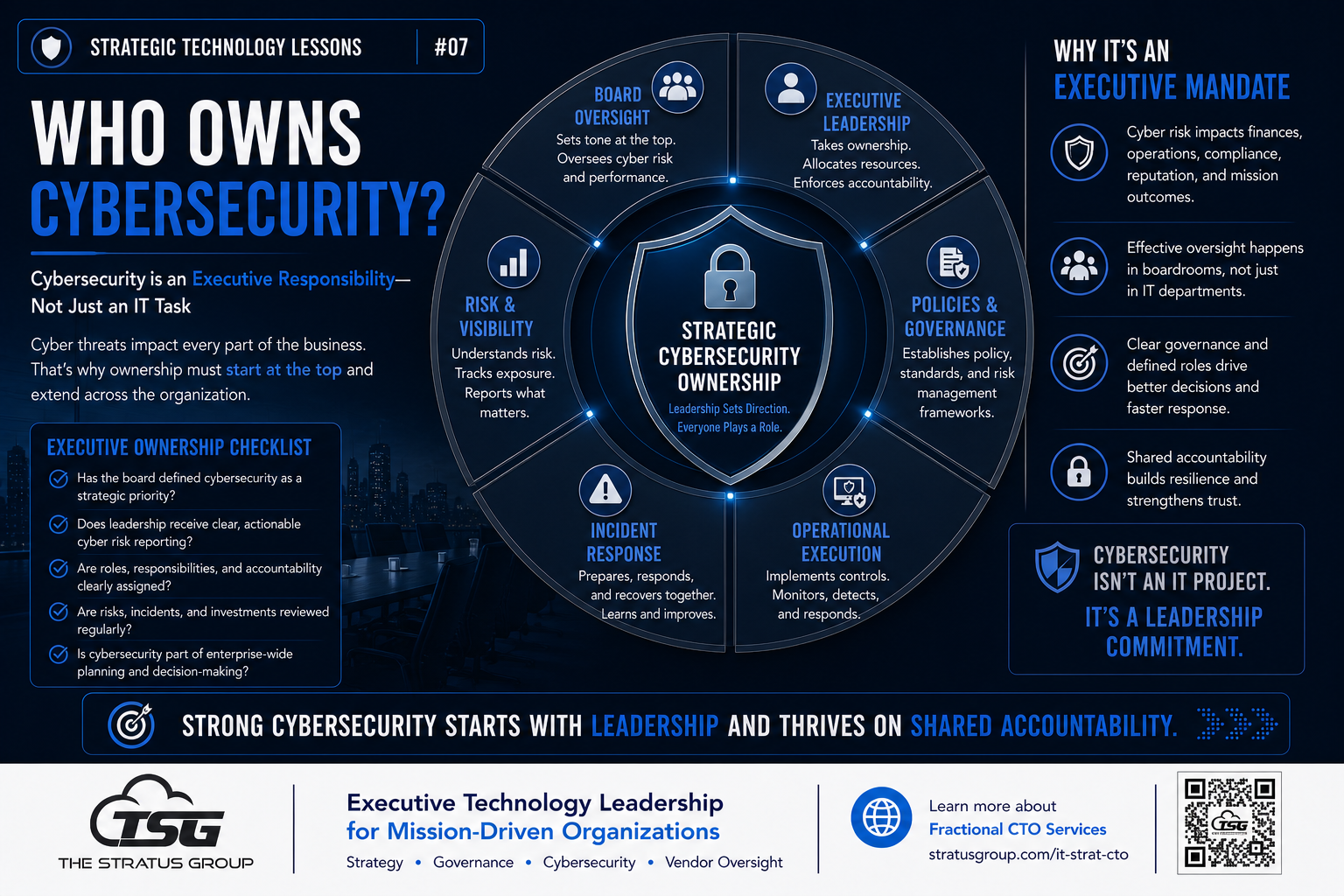
Who Owns Cybersecurity? - STL #7
Who Owns Cybersecurity?
Cybersecurity is often treated as an IT issue. In practice, it is a leadership issue.
Tools, vendors, and technical controls matter, but cybersecurity is ultimately about risk, accountability, and governance. Someone has to decide what the organization is protecting, what risks it is willing to carry, and where responsibility truly sits.
When those decisions are vague, security becomes fragmented. When leadership owns them clearly, the organization is in a much stronger position.
The organizations that handle cybersecurity well treat it as an executive responsibility with technical execution behind it.
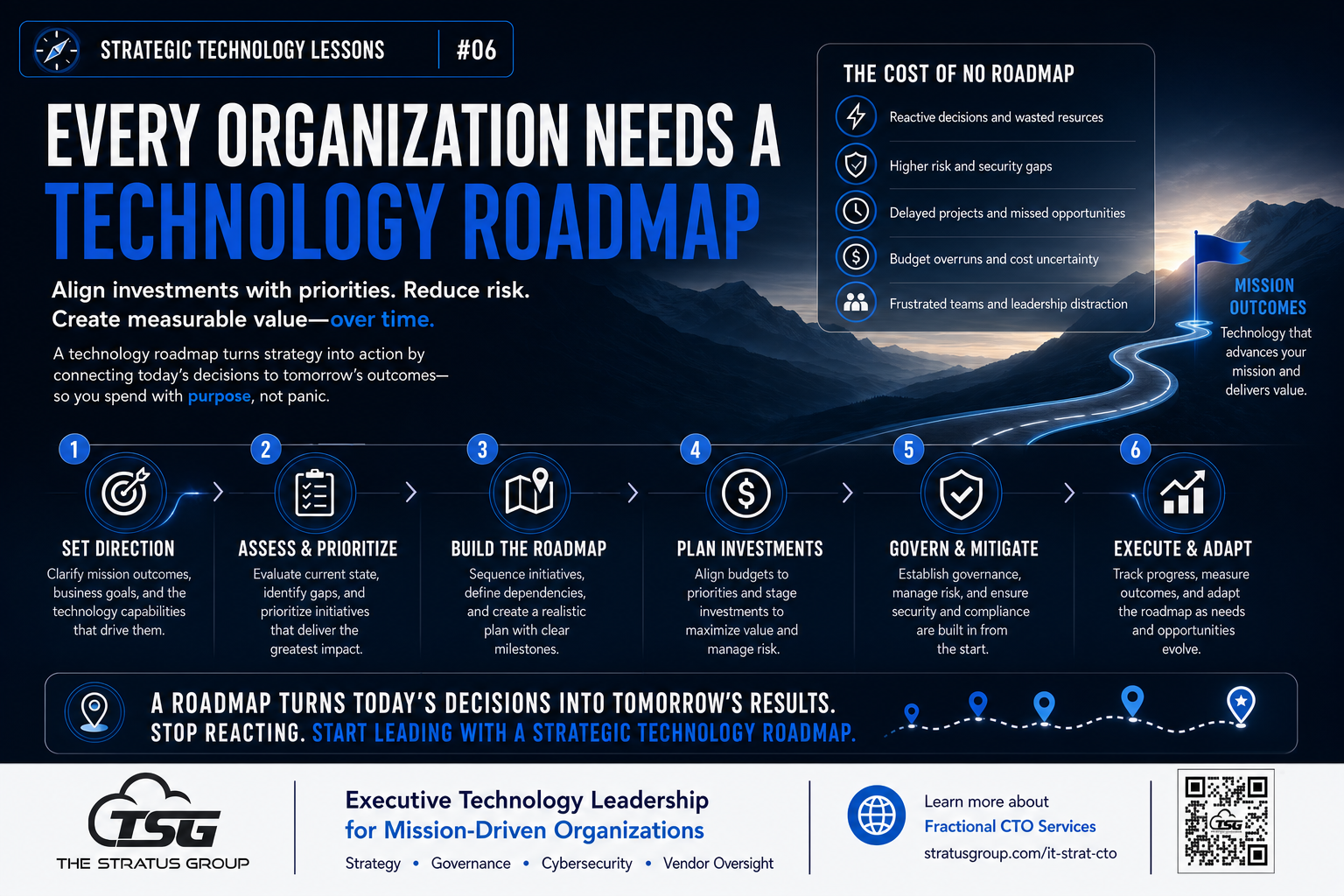
Every Organization Needs a Technology Roadmap - STL #6
Every Organization Needs a Technology Roadmap
Without a roadmap, technology decisions tend to follow urgency, vendor pressure, or whatever issue feels loudest in the moment.
That creates movement, but not always meaningful progress.
A technology roadmap gives leadership a way to connect investments, timing, priorities, and risk to the organization's mission and future direction. It is not just a list of projects. It is a structure for making better decisions before the next decision becomes urgent.
Organizations make better technology choices when they are clear about where they are headed.
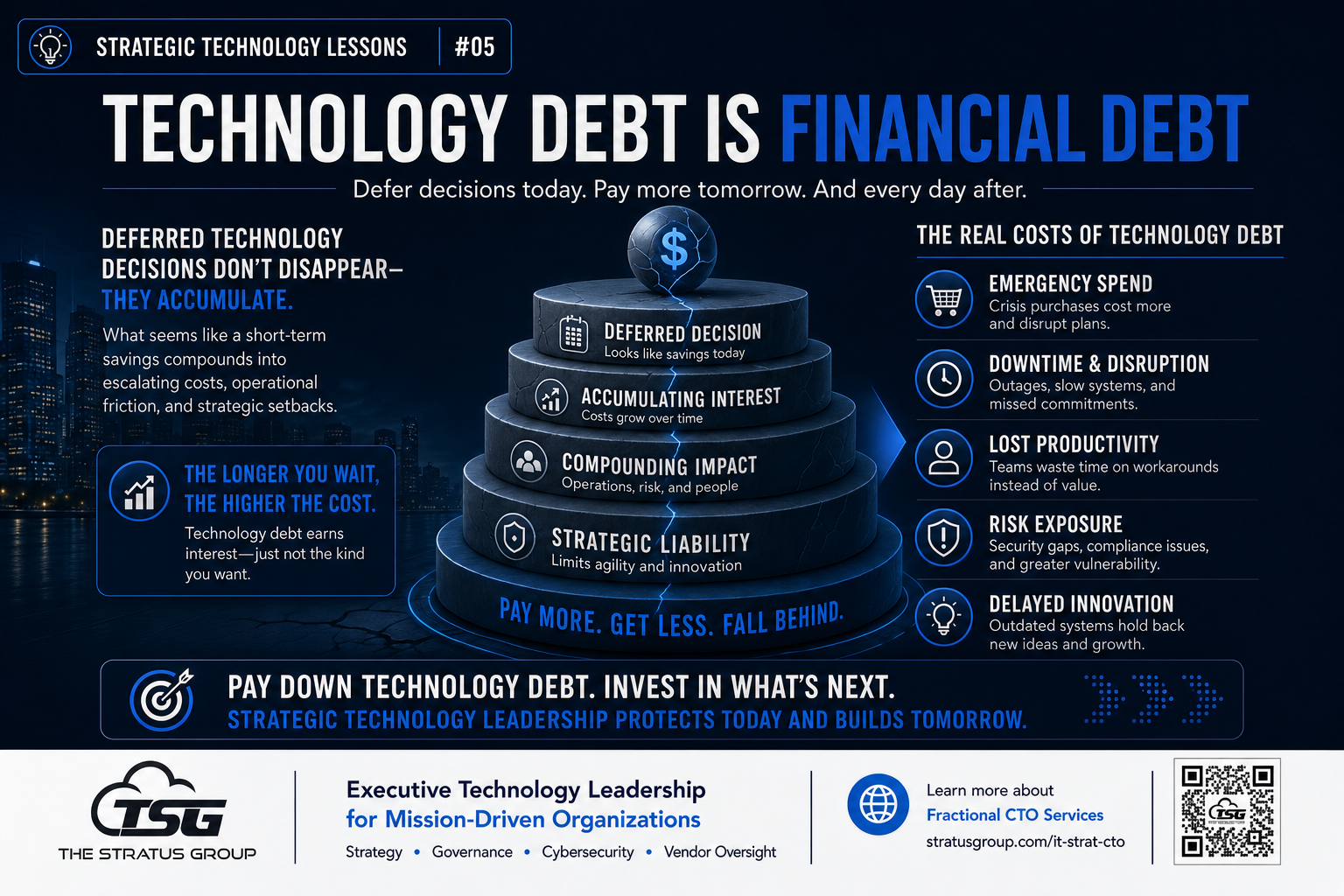
Technology Debt Is Financial Debt - STL #5
Technology Debt Is Financial Debt
Deferred technology decisions are not harmless delays. They create real liabilities.
When upgrades, replacements, and modernization efforts are pushed off, the cost usually returns somewhere else: inefficiency, heavier support demands, rushed projects, and more expensive remediation later.
That is why technology debt deserves the same seriousness as financial debt. It carries a cost. It limits flexibility. And it becomes harder to address the longer it sits.
Leadership does not need to approve everything at once. It does need a clear view of what delay is actually costing the organization.
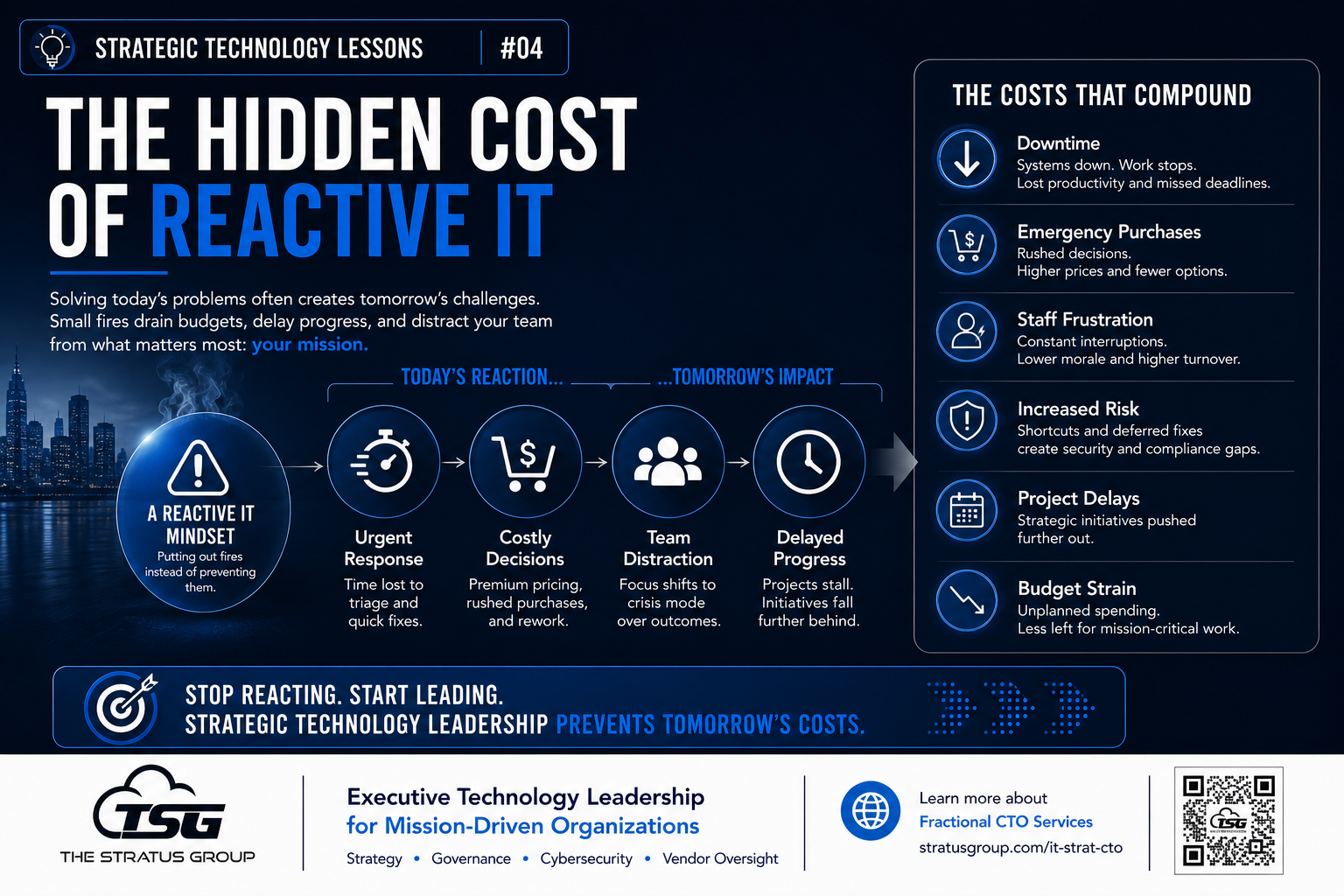
The Hidden Cost of Reactive IT - STL #4
The Hidden Cost of Reactive IT
The visible technology problem is rarely the full problem.
Leadership may notice the outage, the rushed purchase, or the delayed replacement. What often goes unnoticed is everything underneath it: lost productivity, technical debt, executive distraction, and weaker resilience over time.
That is the real cost of reactive IT. When organizations wait until pressure forces action, they give up control over timing, budget, and risk. Urgency starts running the environment.
Well-led organizations make key technology decisions before the environment makes those decisions for them.
The Three Layers of Every Technology Organization - STL #3
The Three Layers of Every Technology Organization
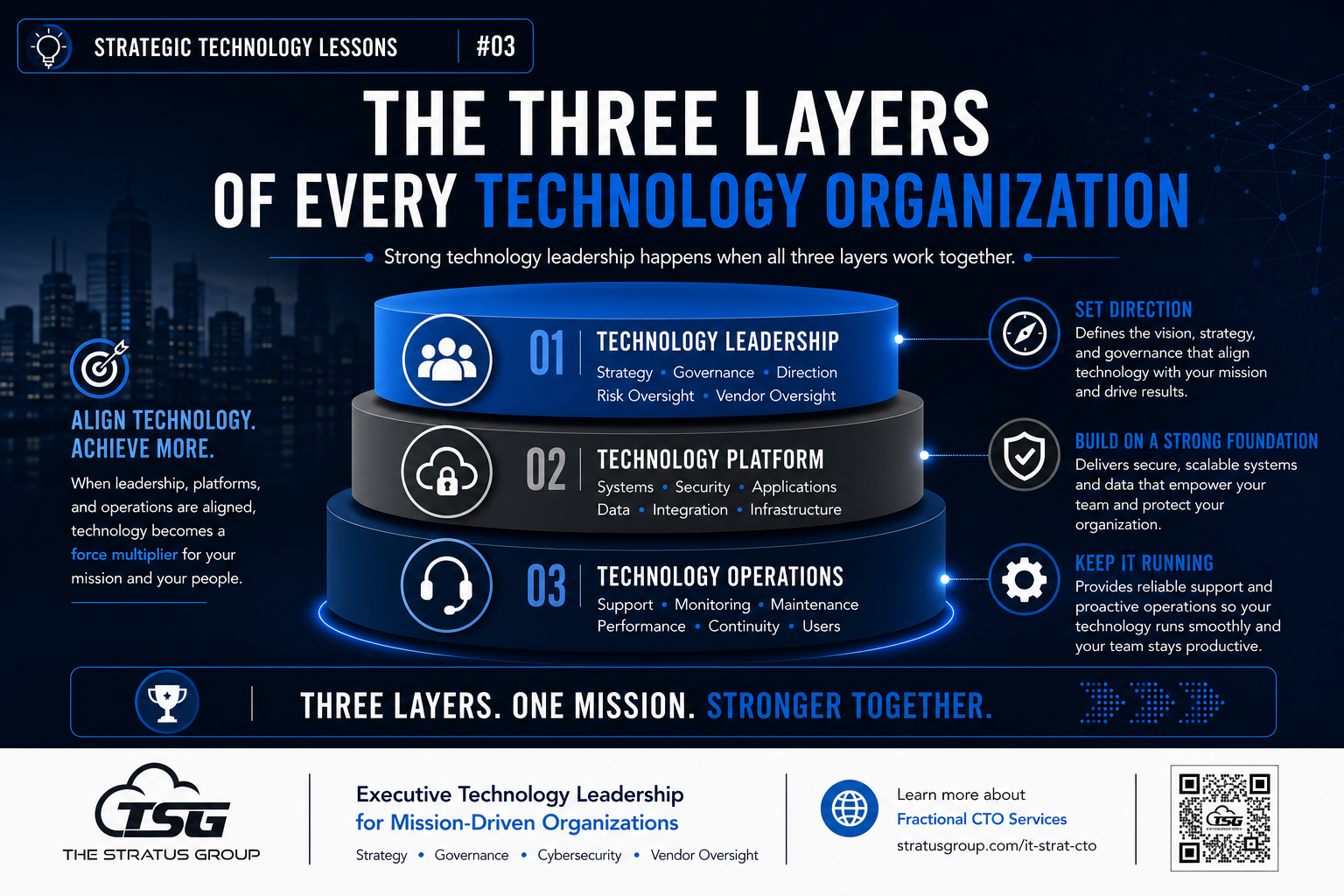
Every healthy technology organization depends on three layers working together: leadership, platform, and operations.
Operations keeps the environment running. The platform provides the systems, applications, and security foundation the organization relies on. Leadership sets direction, establishes priorities, and makes sure technology decisions support the mission.
Most organizations can see the bottom two layers clearly because they are concrete and immediate. The leadership layer is easier to miss, even though it is the one that determines whether technology is being managed with intention or simply maintained.
When one layer is weak, the whole environment feels it.
Your MSP Isn't Your CTO - STL #2
Your MSP Isn't Your CTO
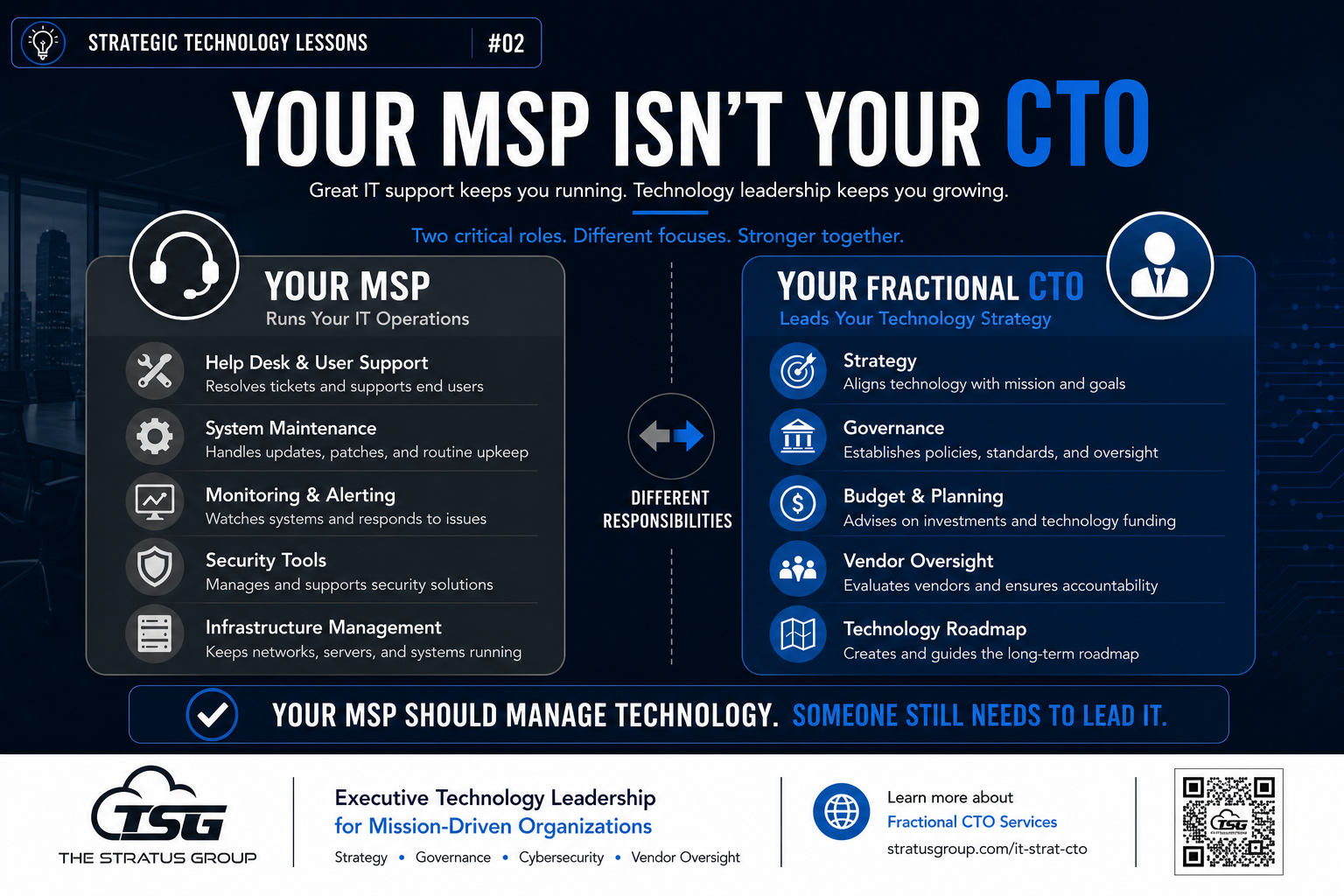
A strong managed service provider can be an important part of a healthy technology environment. They keep systems stable, resolve issues, and support day-to-day operations.
That still does not make them your CTO.
Technology leadership requires a different kind of accountability. Someone has to own strategy, risk, governance, priorities, and the connection between technology decisions and organizational goals. That work sits above support and maintenance. It belongs at the leadership level.
Organizations are best served when they stop expecting operational partners to fill a strategic role they were never meant to own.
Who Is Really Leading Your Technology? - STL #1
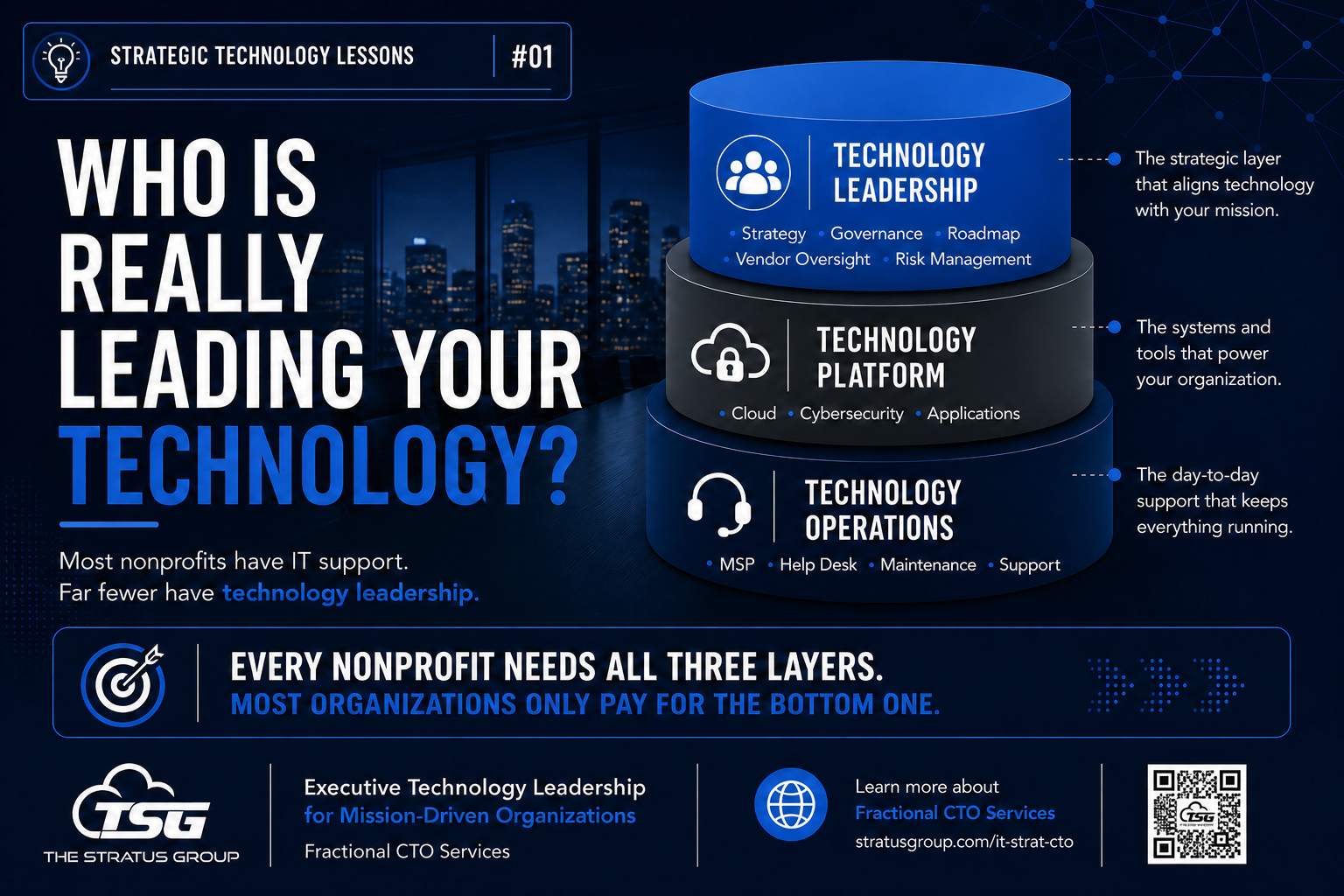
Most mission-led organizations invest in technology operations and technology platforms, but many unintentionally overlook technology leadership.
An MSP keeps systems running. A technology platform enables your staff to do their work. Technology leadership ensures every technology investment supports your mission, reduces organizational risk, and aligns with your long-term strategy.
Understanding the difference is the first step toward making technology a strategic asset rather than simply another operating expense.